2010
Scanning FTIR: Unobtrusive Optoelectronic Multi-Touch Sensing through Waveguide Transmissivity Imaging
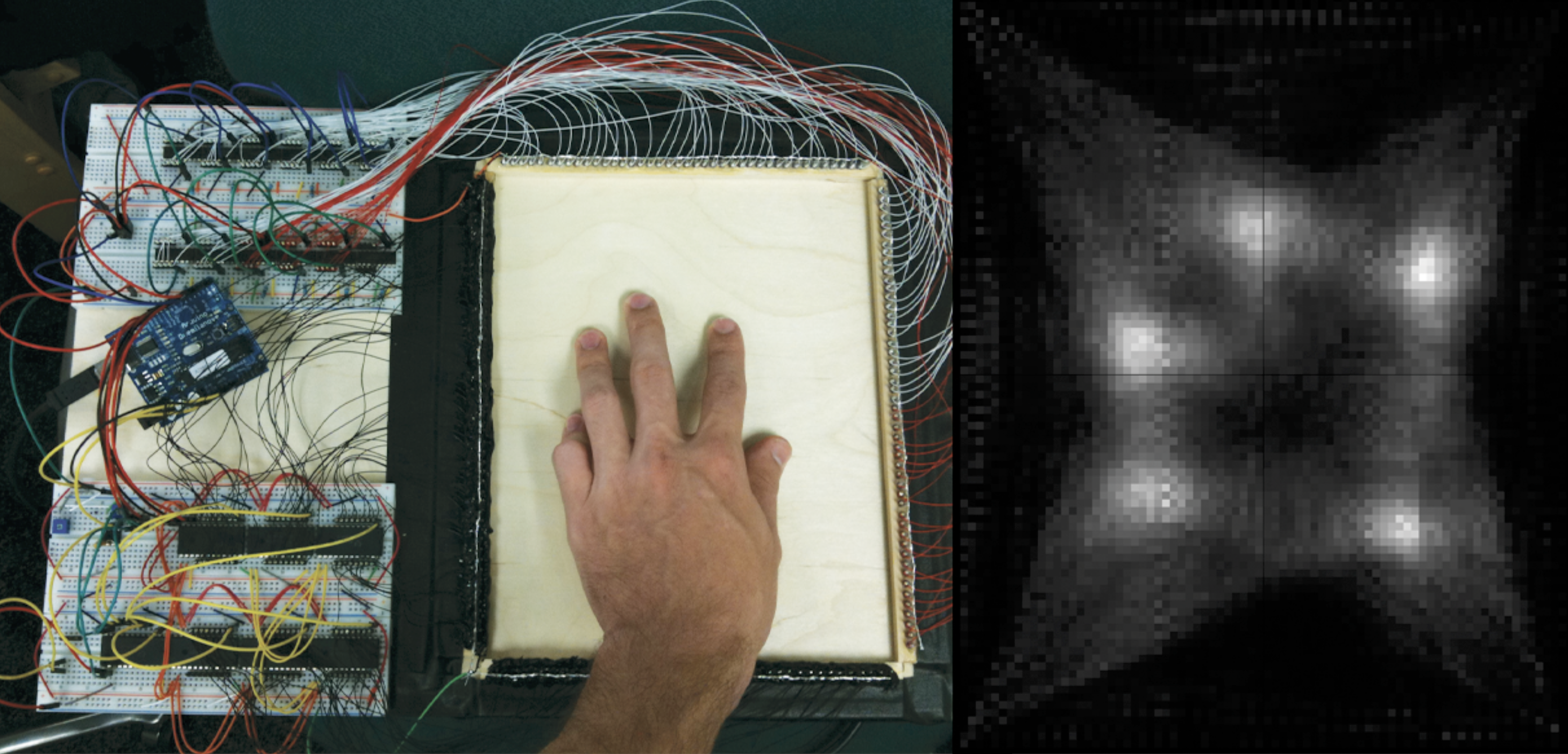
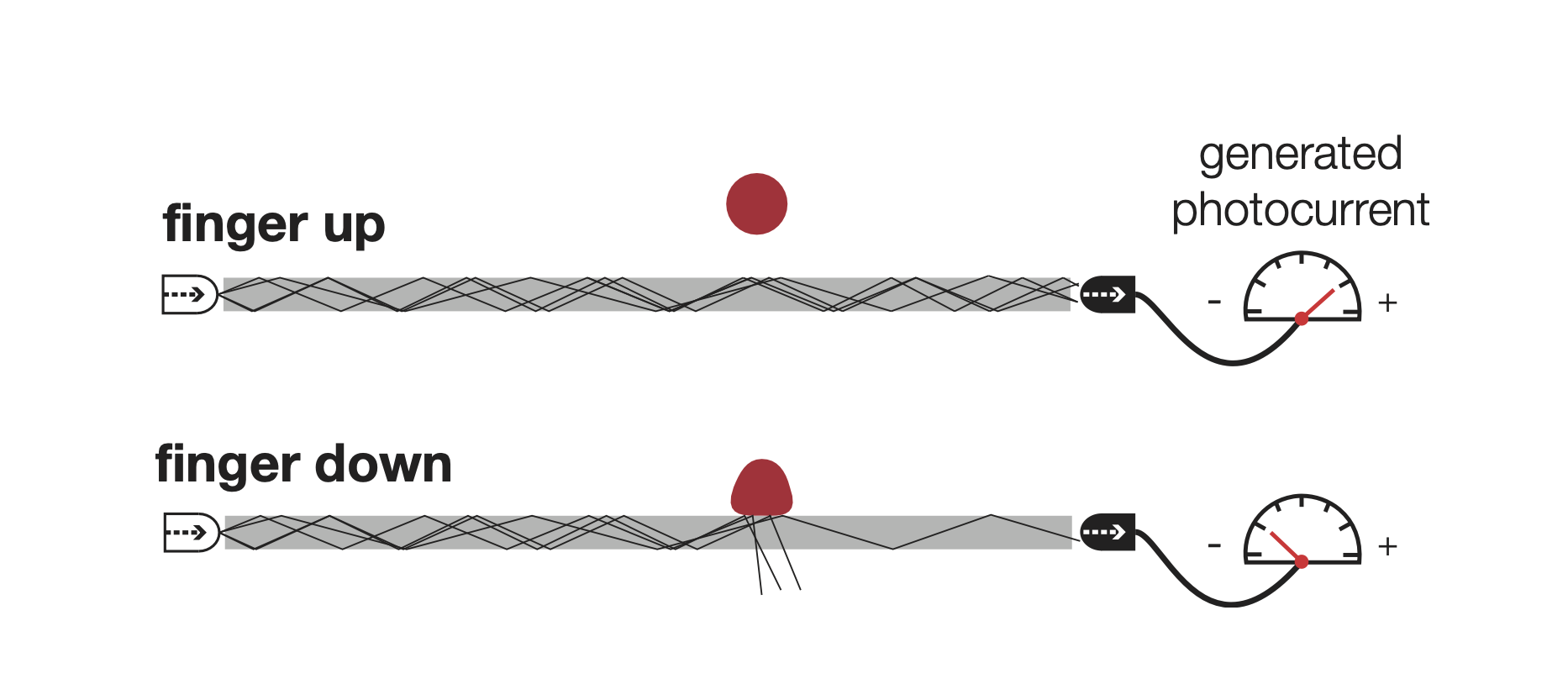
Scanning FTIR introduces a new method of optoelectronic multi-touch sensing that is transparent, unobtrusive, and easily integrated with existing display technologies. This approach uses Frustrated Total Internal Reflection (FTIR) combined with individually controlled infrared sources and sensors arranged along the edges of a planar waveguide. The system reconstructs a two-dimensional image of touch points by scanning these linear arrays, effectively enabling high-resolution multi-touch input without embedding components behind or within the display.
This technology improves on prior optoelectronic techniques by:
- Removing the need for bulky camera systems or embedded sensor grids
- Providing greater immunity to ambient lighting conditions
- Allowing for a completely transparent touch surface
- Simplifying integration with LCD displays
Developed at the Interface Ecology Lab at Texas A&M University, the prototype demonstrated the feasibility of this method, achieving multi-touch resolution better than 1 mm with minimal modification to the display surface.
Published at TEI 2010.
My Contributions
Scanning FTIR System Design
- Designed a waveguide-based sensing architecture using complementary linear arrays of IR emitters and receivers
- Implemented a scanning protocol to sequentially sample sensor readings, reconstructing transmissivity images in real-time
- Devised the grid-based image reconstruction algorithm based on intersecting scanlines
Hardware Development
- Developed PCB designs utilizing TLC5916 LED drivers and CD74HC4067 analog multiplexers
- Integrated Arduino-based microcontroller for ADC sampling and control of source/sensor arrays
- Engineered a scalable optoelectronic setup supporting thousands of sensor-source pairs
Visual Hull Reconstruction & Touch Detection
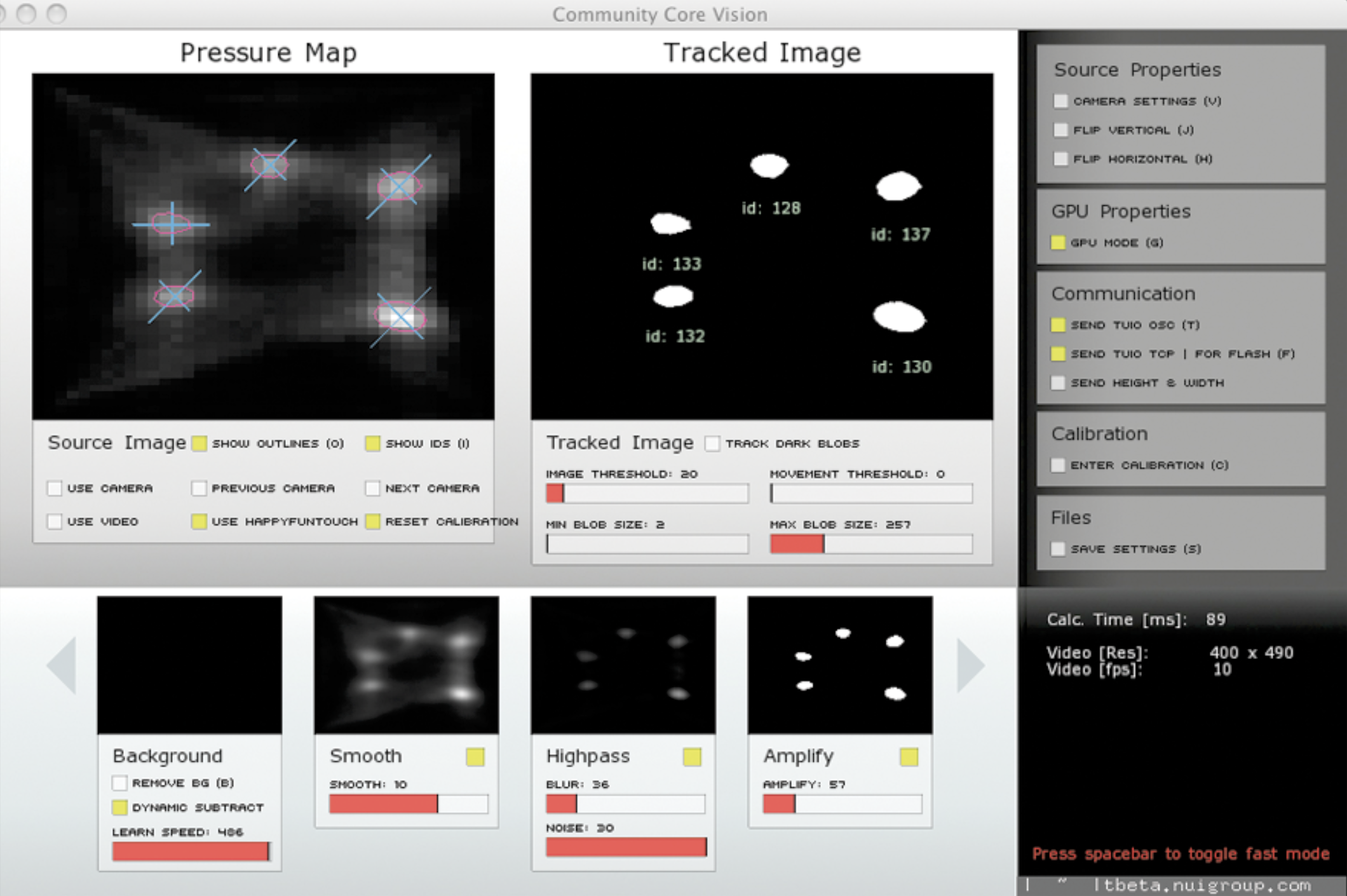
- Extended Community Core Vision (CCV) toolkit to process reconstructed waveguide images
- Implemented blob detection algorithms for touch recognition and coordinate generation
- Analyzed system performance, achieving millimeter-level touch accuracy and evaluating sensitivity to ambient lighting