2012
Pen in Hand Command
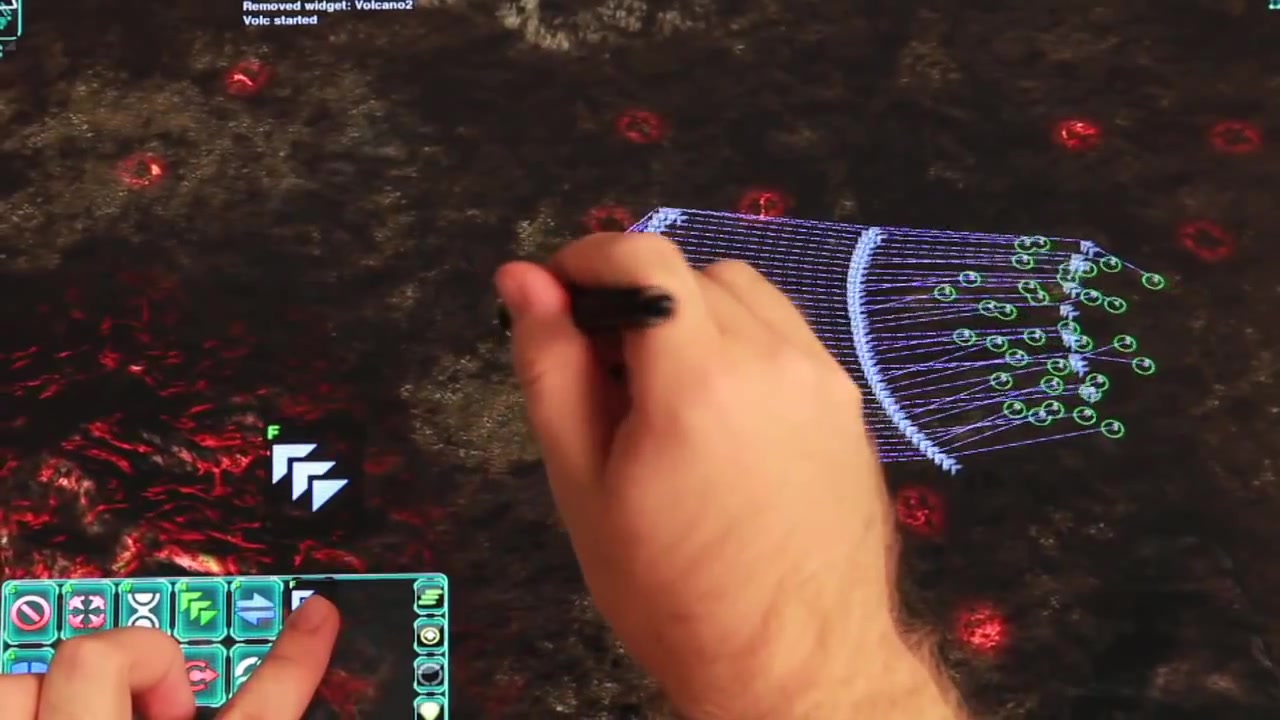
Pen-in-Hand Command explores the design and evaluation of novel pen+touch interaction techniques in the demanding context of real-time strategy (RTS) gaming. We developed a comprehensive interface built on the Spring RTS engine and implemented using a Wacom Cintiq tablet augmented with our ZeroTouch multi-touch sensing technology.
Participants found the pen+touch modality significantly more engaging and expressive. The direct manipulation afforded by the touch interface created a more visceral connection to the game world, while the precision of pen input enabled complex selection and command operations.
Several reported that certain techniques—such as our isosceles lasso select and edge-constrained controls—provided superior control for specific game mechanics compared to traditional input methods.
Our findings extend Guiard's kinematic chain model of bimanual interaction through the identification of pen-in-hand interaction patterns, where users fluidly transition between pen and touch input with their dominant hand while keeping the pen stowed in their palm.
We also developed edge-constrained affordances that leverage the physical boundaries of touch surfaces to improve non-dominant hand targeting precision.
These contributions provide valuable design implications for high-performance bimanual interaction that extend well beyond gaming contexts to any domain requiring precise, efficient input under time pressure.